Manuscript Access

Enter the password to access the manuscript editor.

Grandpa's Stories

Stories from the life of John T. Lewis, as told in his own words.


Table of Contents


Chapter 1: Growing Up

Impact of Skipping First Grade

Speaking of confidence, I'll digress a little bit. I blame my mother for a decision that affected me throughout my school years. She skipped me a grade—I went straight from kindergarten to second grade, missing first grade entirely. She saw that I was bored and thought it would be best for me, but in retrospect, I think that was a mistake.

Being a year younger than all my peers followed me through my entire education. While I could handle the scholastic demands and even the physical aspects of keeping up with older classmates, emotionally I was at a disadvantage. I somehow didn't have the confidence that many of my friends and classmates possessed naturally.

Looking back, I realize this affected my approach to life in a fundamental way. I kind of waited for things to happen instead of making them happen. And that's the difference—leaders make things happen. They don't wait on the sidelines. That missing year, that emotional gap, shaped me into someone who stood back rather than stepped forward.

QR Code

Scan to watch the video clip


Portsmouth Priory Boarding School Years

At Portsmouth Priory, I found myself drawn to the boys with swagger rather than the straight arrows. I was fifteen, navigating my first taste of real independence, and I suppose I was attracted to excitement over responsibility.

I remember one classmate in particular who reminded me of James Dean. He had that kind of swagger that caught my attention, and I thought he was pretty cool. One afternoon, we went off together down the railroad tracks, throwing pebbles at freight trains and just hanging out, doing nothing in particular. When we returned, my English master Kelly, who was a wonderful teacher, pulled me aside. "Lewis," he said, "be careful the company you keep." A couple of months later, that kid was gone. He didn't come back to school, and I never found out exactly why, but apparently he had something in his character or background that wasn't acceptable to the school. At the time though, in that brief moment, I thought this kid had some real pizzazz to him.

My first roommate at Portsmouth was Dick Welch, a wonderful guy but what you might call a square. He was boring to me. Across the hall was another boy, Mike Corran, whom I'd met playing football. Mike had some pizzazz to him, so we arranged to switch roommates, much to the chagrin of the other two guys involved. Mike and I had a pretty good time together. He was a very good athlete, but that wasn't what bonded us. It was his carefree attitude toward life that I found appealing.

A few months into my time there, another student and I were walking when he said, "John, you know, next year you're going to be president of the class." I told him I didn't think so. Well, it turned out that Dick Welch, the roommate I had left behind, ended up as class president. He was boring, but he was a straight arrow, and I suppose that's what leadership looked like.

Portsmouth Priory, now called Portsmouth Abbey, was run by Benedictine monks. My older brother Stan had attended four years before me. It was a wonderful school, and I think it had more of an impact on me than either my previous high school or Princeton afterward. There were very good teachers there, and I was out on my own for the first time at fifteen, sixteen, and seventeen. These were truly formative years.

I had a math teacher, Brother Andrew, who could teach anything. He taught what they called gamma math, algebra, calculus, solid geometry. He tutored students in Spanish, taught Greek—you name it, he could teach it. He was also my advisor, helping me figure out where to go to college. He was simply a top-flight educator of young men. There were men like him at that school who I think were very influential in shaping who I became.

QR Code

Scan to watch the video clip


Teenage Halloween Pranks and Thrills

When I was around fourteen, I discovered that you could buy firecrackers in West Hampton Beach, New York, while they were completely illegal back home in New Jersey. Every July 4th in West Hampton was firecracker time, so I made sure to stock up on extras to bring back to Short Hills for Halloween pranks.

The real prize was a device called a torpedo. Picture a small ball with those little igniters like you'd find in cap guns, but with a tiny explosive inside. Throw the torpedo against a wall and boom—it would go off. I managed to get my hands on about half a dozen of those.

One of our pranks was pretty stupid, looking back on it now. We'd ring someone's doorbell, then run back to the street and wait. The moment the door opened, we'd fire a torpedo right through the open doorway, then run like the devil before they could call the cops. I remember doing that at least once, maybe twice, before I figured I'd pushed my luck far enough.

Halloween night, or sometimes the night before which we called trick night or prank night, we had another scheme. There was a street with a steep downgrade—I can't remember the name now. We'd steal an empty ash can, one of those big rubbish cans, and get it rolling down the street. Then we'd wait for a car to come from the other direction and watch as the driver had to figure out what to do with this runaway trash can barreling toward them. Of course, we'd run like hell the moment we set it loose.

I never told my parents about any of this, naturally. Fortunately, there were never any cops around, and I never spent a night in jail. I couldn't relate to kids who got into much bigger trouble than that.

Looking back, I wasn't the leader of these schemes. I've forgotten whose ideas they were originally, but I was definitely a willing participant—more than just a follower, really. I threw myself into it completely.

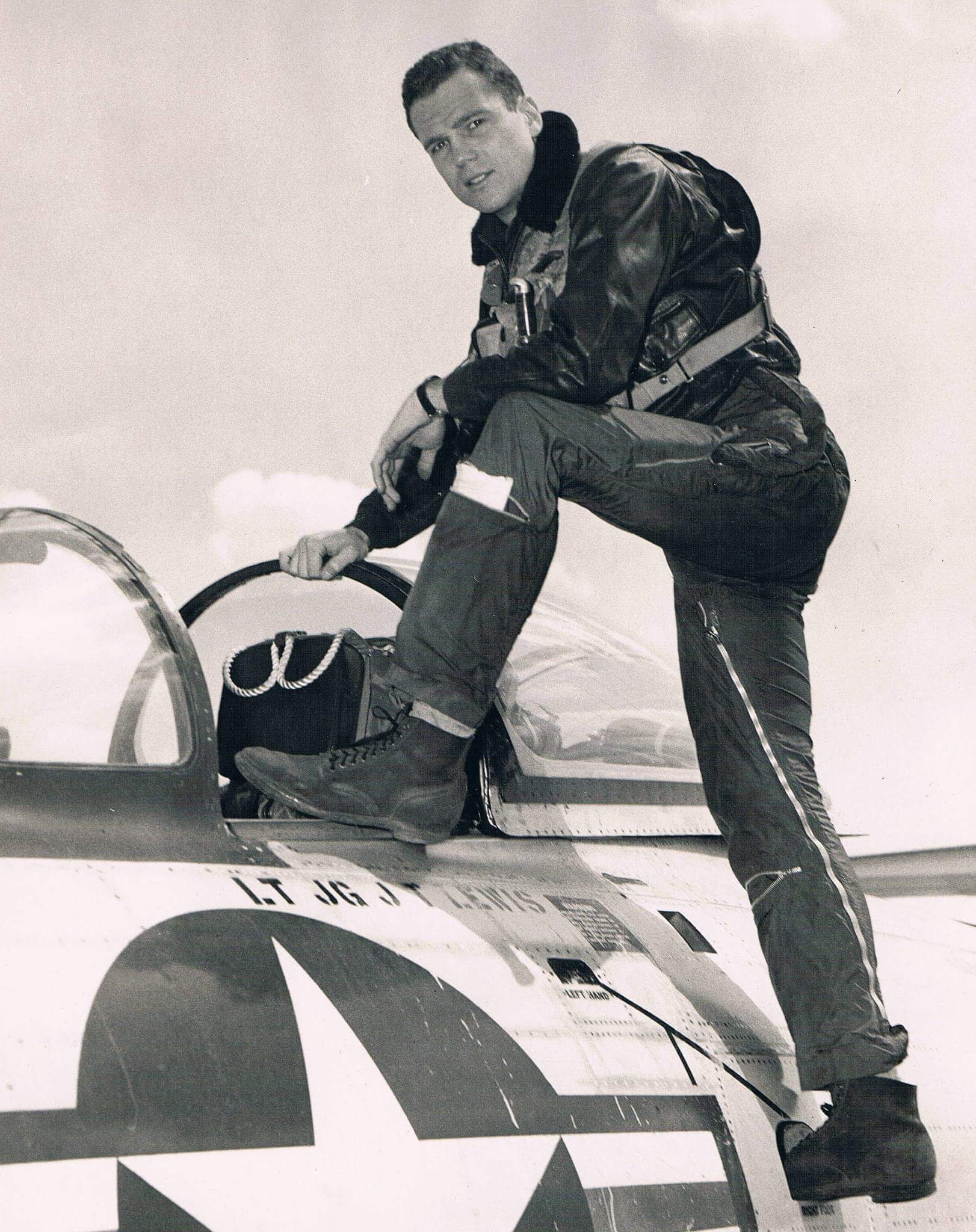
I think maybe that taste for living on the edge is what drew me to fighter aircraft in the Navy later on. Flying those planes was an absolute thrill—the power, the speed, the guns. It was an incredible kick to be able to handle all that, and they were paying me to do it. My gosh.

I've always had that streak in me. When I went skiing, I was a terrible skier, but I wasn't cautious about it. I'd go downhill as fast as I possibly could, and if I fell, so be it. That was just how I approached things. Flying in the Navy fed that same part of me that had rolled trash cans down hills on Halloween night.


Chapter 2: Family Ties

Portraits of His Five Children

Each of my five children has their own distinct character, their own way of moving through the world. Let me tell you about them.

Ann was obviously the sweetheart of the gang. She became like a second mother to Jimmy, since she was probably twelve when he was born. Very kind but also very tough inside, very strong-willed. Which in a way was her downfall, or it led to her downfall in terms of her struggle with two diseases: diabetes and anorexia. She was so tough that she was private about it and wasn't able to reach out to professionals to help guide her through that really difficult challenge of handling those two diseases.

I'll give you an example of her toughness. When she was working in New York, she decided to go to England. She had spent a year there as an exchange student at Smith College, studying at the London School of Economics, and she loved it. She thought she might like to go back and work in London, so she went over there to look around for a job and came back in time to watch her brother John at the Brooklawn Golf Championship Tournament over Labor Day weekend.

Then she announced that the following Tuesday or Wednesday after Labor Day, she had to go see the eye doctor to repair a detached retina in one eye. The other eye was already shot. So here she is, going to London half blind out of one eye and the other eye vulnerable because diabetes affects the capillaries in the eyeballs very early. That's how strong-willed she was. Her eye could have hemorrhaged at any time and she would have been blind on the airplane or anywhere else. She didn't care about the consequences. She just figured she could muscle through any adversity on her own, and in most cases she did.

She would have been a wonderful aunt for all of my grandchildren. She was such a caring person, and I miss her to this day. It's impossible not to. Just very, very complex but loving and tough at the same time.

I have a private theory that her loss helped strengthen the bond between her four remaining siblings. They're all different - Cindy and John, Mike and Jim - but they were close, and somehow I think Annie's passing strengthened that bond so that my four remaining children are a lot closer emotionally than they otherwise would have been.

Cindy was a force right from the beginning. I figured early on, when she was eight or ten, that she was going to be marching on the Capitol steps for some cause. She read a book a week easily. She confided in me a few years ago that she was doing so well in math that she convinced the math teacher to let her skip class occasionally so she could play basketball with the boys, and if she still continued to get A's, he'd let her do it. She conned the guy into it. I didn't know about that at the time.

She was her own person, but I think the thing I'm proudest of about Cindy is that she has over the years become ever more caring of people around her - her family and her friends. She could have easily fallen into a selfishness trap because of her skills. If she'd gone on to Wall Street right away and married some guy who was king of the hill, she might have become pretty headstrong. Cindy's sharp and likes to take charge, but she's very caring, and I'm very grateful for that.

John was a free spirit right from the get-go. At first I didn't think he was going to be good at sports - he had hands like bricks, so he couldn't play baseball very well, even though his younger brother was a very good baseball and basketball player. But John willed himself into being a fine golfer. That was his niche because it was an individual sport, and that fit his personality.

He showed right from the start that he didn't want to be dependent on anybody else and he didn't want anybody else to be dependent on him. You could say he was a loner, but inside he has a very caring heart. He has a great big chest on him now, but I like to think that chest is made up mostly of heart, not muscle.

He's got a heart as big as a house and showed that right from the beginning. But he was always on his own, always wanted to be. I said to him one time when he was going from one thing to another, "John, you're the most resourceful guy I know in the short term, never dependent on anyone, you always land on your feet, but I don't see any long term plan. What are you thinking?" He thought for a minute and said, "Yeah, I guess you're right." That was the end of the conversation. It didn't bother him at all.

He's always been able to try something, gain experience from it, good and bad, and if it didn't work, move on. His first job out of Princeton was working for Prudential Insurance. A tennis club mate of mine happened to be the president of Prudential at the time. John quit after breaking some sales records, and he didn't have another job lined up. My friend asked why he quit, and I said he wasn't happy, it was boring to him. My friend said, "Why didn't he tell me? We would have figured something else out." Well, John isn't going to do that. He's just going to do his own thing and move on to something else if it doesn't work.

I'm convinced he's left a positive impact wherever he's landed along the way because it's impossible for him to leave a negative impact on anybody he interacts with. When Diana and I were getting serious in our dating - she had been single for ten or eleven years, this gorgeous woman with everything going for her - I asked John if I was missing something. He said, "Dad, what's not to like? Get on with it." So we did, and it's worked out perfectly. He's just a great guy and I'm very proud of him.

Michael is multi-talented and also very, very caring. I think that's the common denominator that goes through all of my family - each in their own way has been caring of others throughout their development in adult life. What could a parent want more than that? Nothing. Anything else is fine, but if they're not caring of their own family and others they touch around them, what difference is anything else going to make?

Mike has this dry sense of humor that creeps up every now and then, which is very refreshing. He has very good judgment when it comes to women. Kathleen was the light of his life and just a great choice. He had dated someone entirely different from Kathleen when he was at Princeton, and Mike made the right switch, that's for sure. His judgment is very sound.

Even though he's very far away, to my regret, he always seems very close when we interact. He's done well in everything he's done, and why wouldn't he? He does it in a way without even trying - no big aspirations to be king of the hill here or there, but when opportunity comes up and they put him in it, he fulfills it. Of course, he and Kathleen have brought up three great kids. What better testament to a set of parents than three wonderful children in the next generation.

Jimmy came as a surprise. His mother said to me one night, "I have another birthday present for you," and of course she was pregnant with Jimmy, seven years after Michael. We were both thrilled.

In a way, he was brought up almost as an only child because of that big gap, although his older sister Ann really stepped in to help mother him through his younger years. His mother brought him down to the police headquarters to show him around, let him climb in the police cars. He walked around with a police cap, and most kids go through that phase for a year or two and then want to be something else, but Jimmy never left it. He wanted to be in law enforcement.

I think his motivation was to try to help other people. He wanted to be of service. He's uncomfortable when others are taken advantage of, in his case illegally. He has empathy for people who are in trouble, and I think that has a lot to do with the profession he's chosen.

To his great credit, it wasn't just a fun and games kind of thing or an excitement kind of thing. He has a high moral standard that he sets, and he sets that example for others - his family and others he touches. Again, what more can you ask for? He's been an absolute joy ever since he was a little kid. And again, very good choice in women. Terry's just a sweetheart. It's very gratifying to see the two of them doing so well together.

QR Code

Scan to watch the video clip


Father Stanley: The War Hero

My father Stanley wasn't what I'd call an absentee dad, but in those days it was normal for men with corporate jobs, particularly in retail, to work six days a week. For much of my formative years, he was working six days a week through the Woolworth Company.

The story of how my parents met, which I got third-hand, goes like this: Dad was in Westhampton Beach a couple of years after the First World War, staying with his aunt who had brought him up. His parents had divorced early in his life, and he had half brothers and sisters but no full siblings. That's where he met my mother Grace, and they hit it off big time.

When Dad went to my grandfather to ask permission to marry his daughter, my grandfather asked, "What are your references?" One of them was Teddy Roosevelt Jr., who was a general in the First World War. My dad had become adjutant to Teddy Roosevelt Jr. in the latter part of the war. He'd been a sergeant, got a field commission, and ended up as a captain.

My grandfather picked up the phone and told his secretary, "Get me Teddy Roosevelt Jr." When they got him on the line, my grandfather said something like, "I've got Stanley Lewis here. He wants to marry my daughter. What can you tell me about him?" The answer came back: "Not a streak of yellow in him." My grandfather replied, "Okay, that's good enough for me."

So Dad had a reputation early on of being a straight shooter with a fun streak in him and a dry sense of humor. I think my mother fell for him because he was a man's man. He was his own person, kind and fair, but if things didn't go his way with somebody else, they were going to know about it.

I didn't see a lot of him except during summer vacations. There was no playing catch in the backyard at five or six o'clock because he wasn't home then. But he loved his kids and loved the Westhampton Beach scene. During his couple weeks of vacation, he became Commodore of the yacht club, even though he didn't know a thing about sailing. He was an organizer, and since all his kids sailed when we were youngsters, he immersed himself in that scene because we were in it. When he was able to participate away from work, he was in it full boat, setting a great example.

I remember when I was on the JV team at Princeton, we went up to Harvard to play. He wangled some kind of trip with the Woolworth Company to visit stores so he could watch me play. He didn't get to the game until halftime and missed my first-half touchdown. But afterwards, we stayed overnight Friday at the Plaza Hotel, and he was up at the bar drinking martinis with the coaches, having a ball. He was a gregarious guy who loved people.

When he worked, though, he worked hard, and he certainly did well enough by my standards. He loved his work so much that he didn't retire until he was sixty-eight.

Before he got engaged to my mother, when he had to present his credentials to my grandfather about his work prospects, he and his brother sold nuts in little kiosks around New York. My grandfather went over his business with him and pointed out that he wasn't plowing back his income. It was a cash business, and my grandfather told him they needed to figure out something with more longevity. So Dad sold that business and started out in the stock room of the Woolworth Company. This may have been because my grandfather's bank was the lead lender for Frank W. Woolworth when he was building his chain of successful five and ten cent stores.

Dad gradually worked his way up. He was a merchandiser who loved selling in the positive sense of the word. There wasn't a devious bone in his body. He became a store manager, then managed bigger stores, then got the flagship store on Fifth Avenue, then became a superintendent managing multiple stores. Eventually he became the toy buyer, figuring out all the toys for the entire chain. That was a top job, as high as you could go staying in merchandising, and he loved it. That's why he kept working until he was sixty-eight.

I don't think he was trying to impress his father-in-law. He had his own motivation. Sure, he didn't want to disappoint anyone, and he wanted my mother to be proud of him, but he didn't work for people to be proud of him. He worked because he liked it and loved interacting with other people. He loved action and had an impressive sense of humor about it all.

His commute was relatively easy by New York standards. When we lived in New Jersey, it was one hour door-to-door from our house to the Woolworth building. He'd walk to the train station in Short Hills, take the Lackawanna Railroad to Hoboken, jump on the Barclay Street ferry, and walk from the ferry terminal to the Woolworth building. He'd be back home by six-thirty or seven. Fortunately, his job never required moving around the country; he always worked in or around New York.

He was always a fun guy who liked to be involved with whatever his kids were doing. When I was in the Navy based at Oceana, Virginia, I had my parents come down to visit because they'd never been exposed to my early career. I arranged to take a flight one Saturday when we were working, and they watched from the control tower. I got permission to make a low pass over the field, thinking to myself that I better not screw this up because I didn't want to die in front of my parents. They got a huge kick out of being down where the action was. Later in his life, when he had more time, he was always ready to be involved with whatever we were doing.


Mother Grace: The Progressive Organizer

My mother was a very self-sufficient person. These days you might call her an activist, and I think if she'd been born thirty-four years later, she would have been doing something career-wise besides being a homemaker. When we were kids, it was very unusual for housewives to have jobs, but she probably would have chafed at that a little bit in later life if she'd been born later, not to have some kind of career because she was an organizer. She was a very people person who ran the house and set the example for the rest of us. She was a little adventurous too. One time she even tried grass on our salad because she thought grass was helpful food. It was green, so it had to be healthy.

My cousin Lois once said that of the three sisters, with Mom being the youngest, she was the organizer while another was the romanticist and the other something else. But Mom was definitely the organizer.

I heard a story from when she was young, maybe a teenager, traveling with her parents down south somewhere at a hotel where Annie Oakley was performing. Annie Oakley was a vaudeville star who came out in buckskins with a shotgun and had a swagger about her, singing songs like "Home on the Range." There was some sort of costume party that night, and my mom went right up to Annie Oakley and asked if she could borrow her outfit for the party and got it. She was accommodated. So she had some real gumption about her from a young age that showed up periodically. She didn't take no for an answer from anybody, but was sweet about it, not in your face at all.

She was a little bit of a breakthrough in other ways too. We had a black woman named Nelly who did some housework for us in New Jersey. Nelly had four kids and was a single mother. The father had disappeared somewhere. With my father's agreement, because anything my mom wanted was okay with him, she had Nelly and her four kids stay with us in Westhampton at the house. There was a big old house that my sister eventually inherited, with three little tiny rooms called "servant's quarters," that's how old the house was. Nelly and her four kids stayed the entire summer.

There were twins and an older girl, Edna, who was my brother's age, probably fifteen at the time. I mean, that was kind of a gutsy thing to do, I think, for three months, having these kids in the house. They walked down to the beach when they had a day off and such. My mother felt it would be good for the family, good for Nelly and her kids to get out of the New York environment where they lived and see a little bit of the outside world. Nelly was very loyal and very grateful for that. I thought it was gutsy. Who would do that?

After Pop died when he was eighty-two, Mom resisted moving in with us for a long time. She was on her own and moved to a smaller house. She intentionally made it a two-story house so she could make sure she climbed stairs every day to keep her legs in shape. Then she decided she couldn't live alone anymore because the clue was she couldn't button her buttons. Her arthritis got in the way.

She and my wife started to figure out where she should go. She wanted to be in Connecticut because her three sons were in Connecticut, and Barbara was still in New Jersey, but that wasn't that big a deal. We hunted around. "I don't want to be a burden on my children," she said. Eventually, we convinced her to move into this little two-room setup in our house where my wife's father had lived for a few years before he died. That worked out great. My wife and Mom got along very well. Sometimes that doesn't work.

She lived with us for a few years and then fell and broke her femur, not her hip, just where it connects to the hip bone, at age ninety-four. She was just walking down our little dead-end street. She had to go through therapy and stayed at a nursing home for a while. "Am I ever going to walk again?" she wondered. I said, "Well, I don't know, Mom, but if anybody can, you can." And she did. She toughed it out. It was painful.

When we decided to move down to Vero Beach full-time, there was a question about what was going to happen to Mom. We got enough courage to say, "Mom, you know, look, we think we're going to want to move." She said okay. We picked the Osprey in Rye, New York, which ended up being a good choice. Within two minutes of deciding, she was in there picking out which furniture to take and which to leave. She was all ready to make the next adjustment. She didn't miss a beat. There was no agonizing or trepidation. It was a new adventure for her. Everything was a new adventure for my mom. Never an obstacle. It was always a challenge or fun.

I took her to Rocco's restaurant in Westport, where we used to go frequently. I introduced Mom to Rocco and said, "What do you think, Rocco? Not bad for eighty-five, right?" He said, "Wow, I'll say." I said, "How about ninety-four?" "Whoa," he said. "You want to trade mothers? I go to visit my mother and all she does is complain. I get a headache after five minutes with her."

We asked Mom the inevitable question about what she attributed her vivacity and longevity to. She just batted her eyelashes at him and said, "I'm optimistic." Rocco looked at me and said, "You want to trade mothers?" That was her mantra. She always looked forward, never looked back, never had regrets. That's a marvelous trait to have. It was just innate in her. She was a real joy.

For her hundredth birthday, one of my nieces hosted a party. I think it was Amy, who's sort of the glue that holds that family together. We were up there in Darien, and my brother got up and said, "Not if, but when my mom lives for another two years, she will have lived in three centuries." Everybody cheered. She looked around and said, "No glory in that."

She did live to one hundred and three. To my regret, she and my love, Diana, never met. They just missed each other by a couple of months. Just as Diana and I were getting really tight, Mom died. It was too bad they didn't meet because it would have been a great match for the two of them, since they're both so important to me.


Sister Barbara's Challenges and Strength

Barbara died at age seventy-three from ovarian cancer that metastasized into brain cancer. It was tough to lose her because she and I were on the same wavelength. We were closer than either of my two brothers and I, for different reasons. My older brother was kind of a loner and five years older, so that's understandable. He was gone a lot when we grew up, but Barbara and I were close emotionally.

She was an organizer like our mother, becoming president of the Kent Place alumni association. She liked that work and was highly respected. In fact, a friend of ours, Kathy Favor, who became president of Kent Place, knew of my sister and had very positive memories of her.

Barbara had a tough time though. She and her husband Bud went eight or nine years without any children of their own, so they adopted two children. First they adopted Debbie, then Robin, and then after nine years they had a child of their own, Hillary. How about that?

Debbie, God bless her, is still alive, but she had some problems. She was manic depressive, what they call bipolar now. She wouldn't take her medication and would lash out or scream at her mother during these periods of being out of control. It was tough to bring up a daughter like that, but Barbara handled it stoically and patiently, which was her nature. She understood that Debbie couldn't do anything about it, so Barbara just kind of rolled with it.

I was the one who had to tell her when her husband dropped dead on the paddle tennis court. Barbara was up in Haverhill, Massachusetts, going through a reunion with Bradford Junior College where she went. I had just gotten back from taking her dad and John down to Princeton to see a football game when Bud died that afternoon. We got a phone call and my wife told me about it, so it was up to me to track down Barbara.

When I told her the situation on that Saturday night, she said, "Oh, I knew something was not great." She sucked it up, got some friend to drive her from Massachusetts to Connecticut, and got there about midnight. She stayed overnight, and the next day she and I drove down to Chatham, Massachusetts, where they lived. I helped her walk through the process of picking up the pieces after that, which she handled without breaking down. She went about it very stoically and was able to march on and tough it out under those circumstances. That's the way she was: very kind, very capable.

She would have been a great aunt for you guys.

We sailed together a lot. We had a shore bird, a twenty-one-footer. Sometimes I'd skipper, sometimes she would, especially when Stan was off at war. When you sail together as brother and sister, that could be a problem over time, but it wasn't a problem for us. We were always on the same wavelength, always teamwork.

She was a great sister.


Brother Stan's Independent Adventures

My brother Stan was his own person, independent and untethered, always doing his own thing. Maybe my uncle John inherited a little of that spirit from him. I remember when my mom, Barbara, and I went to the 1939 World's Fair in Flushing, New York—one of the big early ones. Stan was chafing at the rest of us slowing him down, keeping him from exploring every corner of the fairgrounds. So he'd sneak out of line somewhere, watch a show, see the General Motors display, then catch up to us while we were still standing in line waiting. That was just his nature.

The psychologists would call him subjective. My mom had me analyzed once, and they said I was objective—meaning I was conscious of how people interacted with me and how I interacted with them. Stan didn't care about any of that and didn't pay attention to it. Not that he was nasty or pushy or rude, nothing like that. He was just an individualist.

One time he decided he wanted to bike ride from Short Hills, New Jersey to Westhampton Beach—about 110 miles. He was thirteen or some age like that. His plan was to stay overnight in Garden City, pick up my cousin Eddie, and they'd drive the rest of the way from Garden City to Westhampton. But Stan was going to bike from Short Hills to Garden City, take his bike on the ferry, ride down Canal Street in Lower Manhattan, go over the bridges—all of it. At thirteen years old. My mom said, "Okay, that's what you want to do. Just check in when you get in trouble." She was an independent thinker herself and respected his desire to push the envelope at a pretty young age. This was back in the thirties—he was born in 1924—so that was pretty gutsy of both him and his mother. But that didn't phase him one bit.

Stan loved the water, small boats, sailing, all of that. When he was in Navy ROTC at Brown during the war, it was an accelerated program to get guys commissioned so they could join the fighting. He opted for PT boats. You know, like John Kennedy—there was no connection other than that Kennedy also loved sailing. They both went into PT boats to transfer their love of the water into their naval service.

He went out at the end of the war as a second officer on a PT boat, then got his own command, picking up prisoners after the war. He'd send us letters in a little code he'd worked out to tell us where he was, because the censors wouldn't allow you to say your location when you were operating in the Pacific during the war. He figured stuff out like that.

He got his commission at Brown in 1944, a year before the war ended, but he was short of credits, so he didn't get his degree when he got his commission. After the war, he had to come back to finish a semester at Brown to get his degree. So there he was at Brown while I was a freshman at Princeton.

We played Brown at football, and I was on the freshman football team. It was the freshman team's duty to guard the goal posts from being torn down by the visiting team's fans. So I'm there with my buddies, and here comes my brother from Brown, edging his way toward the goal post. I see him coming from the stands on the Brown side, and I said, "There's a Brown guy!" About four guys jumped on him and carried him off. He looked at me like, "How could you?" We had a little rivalry there.

But I also remember when I graduated from prep school in May or June of 1946, just before I started as a freshman. He was back from the service by then, and he gave me a graduation present—took me to the Joe Louis-Billy Conn heavyweight boxing match in Yankee Stadium. Joe Louis had fought Billy Conn earlier in a close match that Louis won, but it wasn't a pushover. Conn was the light heavyweight champ, so there was a rematch. There were about 50,000 people in Yankee Stadium, and Stan bought twenty-dollar tickets for the two of us up in the stands with binoculars. I thought that was a pretty innovative graduation present for a younger brother—different and fun.

Even though we didn't grow up close and weren't that close later on either, we had an affinity toward each other. It was very positive. Later, when he was on his own, he moved down to Vero Beach and bought a condo there. He and Diana hit it off beautifully. She became sort of his confidant after he divorced his wife, talking about his dates and all that kind of stuff. The two of them got along wonderfully, which was a credit to Diana—she loved both my brothers.


Grandfather Pearson's Rise and Fall

I don't know nearly enough about my grandfather Pearson, but what I do know paints a picture of a remarkable man. He was a banker by trade who started as a teenager and worked his way up to become president of Urban Trust at the very young age of forty. That bank eventually was bought up by the Bank of New York, so it was clearly a viable operation.

But Grandfather Pearson was much more than just a banker. He was a people person, a high-energy guy who was highly motivated without being destructive or a climber. He simply wanted to succeed. What really set him apart was his great vision for the value of real estate. He was one of the pioneers of the West Hampton area back in the 1920s, visualizing it as a getaway place for New York businessmen. He bought up a lot of land over time because he felt it would be a hugely profitable investment, not just for domestic reasons but for financial ones. He was a real visionary.

I think he and I hit it off pretty well, and it's too bad he died at the relatively young age of eighty-two from prostate cancer. I had just gotten out of the Navy and started working at Sikorski, where I'd been for three months as a clerk in the spare parts department. At Thanksgiving dinner, he asked me what they had me doing. When I told him, "Not very much," he spent about two minutes listening to my description of virtually nothing before telling me I should have been knocking on the door of the president. "When are you going to get the lead out of your pants?" he asked.

I think he saw me as somebody who had some potential, but he didn't want me to wait around for things to happen. He wanted me to make things happen myself. He would have been a great mentor had he lived longer, but he died several months later.

The Great Depression brought a dramatic change to his circumstances. He had been in great shape financially, with big yachts and horses and land. But one day, over a short period of time, all of that went away. The story goes that he had been a director of a public utility, and in those days, directors were personally liable for the bondholders as a last resort. If the utility ran out of money, they had to pony up legally, and he did. Others in his shoes did not. A couple of them left the country to escape prosecution, including one very high-profile public man.

But Grandfather Pearson's position was simple: if you don't have your reputation, you don't have anything.

Even after losing most of their wealth, he and his wife were still in good enough shape to subsidize the maids for my parents and his other children. One day, my mother was called to New York by his mother, who said she had bad news. When my mother asked what it was, she was told, "No more maid." My mother's response was, "Elizabeth, oh, is that all?" Her sister reacted quite differently, saying, "Oh my gosh, what am I going to do?" But my mother just said she thought it was something really important and wondered why they couldn't have told her over the telephone instead of making her come to New York.

It all happened pretty quickly, so when he died, there wasn't much left, relatively speaking. I remember being at his memorial service, and my father told me as we were going down the aisle afterward, "If such and such hadn't happened, you and I would be in a lot different shape than we are today." That was pretty much the end of the story, and I wasn't curious enough to pry into the details.

Growing up, I knew we were privileged and that life was kind of la-la, but I don't think my understanding went much beyond that. He was a big wheel, but it all disappeared during the 1940s. He was a man who chose honor over wealth, and his reputation meant everything to him.


Annie's Tragic Battle with Diabetes

Annie's battle with diabetes was an iterative process that slowly destroyed her body. Type one insulin-dependent diabetes demands immense discipline, and when it's not under good control, everything starts falling apart. The circulatory system deteriorates, with eyesight being the most vulnerable because the tiny capillaries in the eyes have very thin walls that break down when there's too much sugar in the blood.

Despite her condition, Annie was fiercely independent and to her great credit worked in New York City. At the time, we had a cottage down in Vero Beach, and I was still working. But I kept getting emergency calls that she'd been rushed to the hospital, requiring instant reactions from us. When these crises became intense and frequent, we decided to sell the cottage and bail out of John's Isle to come back home. It looked like Annie was going to have to live with us because she couldn't support herself in the city anymore.

By this point, she was blind in one eye and about three-quarters blind in the other. She had also shattered her ankle stepping off a curb in New York. Severe diabetes causes neuropathy in your feet where the nerve endings deteriorate, so she couldn't compensate properly when walking. When she stepped down with a little more impact than normal, her ankle didn't just break—it shattered into many pieces. They call it Charcot.

With her ankle in a cast, I went to pick her up and told her she couldn't make it on her own anymore. I practically forced her to give up her apartment in New York and come live with us in Fairfield. That was a big problem for her because she desperately wanted her independence. But she was living alone, trying to fill her insulin needle with a little magnifying glass, looking through one eye, and getting around on crutches because of her ankle. I practically blackmailed her into giving up her apartment.

She was still badly anorexic, and we thought maybe an eating disorder hospital in White Plains, which was part of Cornell Medical Center, could help. We talked her into going because she couldn't balance her anorexia with her diabetes. We hoped that if we could get her eating disorder straightened out, she could stop her constant tendency to go into insulin shock from not having enough food.

She finally agreed, and I took her down to Cornell Medical Center for what was supposed to be a thirty-day program. But the hospital called to tell me she had left. When she discovered her insurance had run out, she convinced an acquaintance whose parents had come to pick them up to take her back to New York and back into her apartment, which she still owned.

I thought to myself that she was going to be dead in six weeks—she wasn't going to make it. I wasn't exactly right, but I was close. This happened in April, and it was Memorial Day weekend at the end of May when everything came to a head.

We were back in Fairfield and she was alone in her apartment. I called her to see how she was doing, but got no answer. I reached John, who I think was in New Jersey at the time, and asked him to get in there right away to find out what was going on. He found her unconscious in her room.

They rushed her to the hospital where her blood sugar was around 700. Yours and mine runs between 80 and 120, which is normal. She had gone into insulin reaction and then, for lack of insulin, her blood sugar skyrocketed and she went into a diabetic coma.

After a few days in the hospital there, with us traveling back and forth from Fairfield to visit, we moved her to St. Vincent's Hospital in Bridgeport so we could see her more readily. But there was no change. She was in a permanent vegetative state—brain dead, colloquially speaking.

I contacted a good friend of ours who was the chief medical officer of St. Vincent's, a wonderful black man. I told him this wasn't working and that I thought we should stop everything. She was on glucose and saline solution with insulin to keep her going, but nothing was happening.

Around July, I had to go before the Ethics Committee of the hospital. St. Vincent's was a Catholic-run hospital managed by a nun, and the Ethics Committee included a Jesuit priest from Fairfield University and other people who would decide whether I was right or wrong. I went in there to explain why I believed I was speaking for her, even though she didn't have a living will.

They asked how I could know she wouldn't recover. I told them I didn't know for certain, but if she did recover, she would crawl out of that hospital. That was her nature—she wouldn't stay there, you'd have to chain her down. She would never accept living a life of complete invalidity.

They finally agreed after I convinced them. But a couple of days later, my friend John Lawrence, the chief medical officer, explained that the nurses were trained to keep people alive and it was difficult for them not to keep her going. So we moved her to Carleton Nursing Home, where I had a friend who ran it, Carl Mentore, a wonderful man. Ed Engle, Connie's dad, had spent his final years there after his stroke.

I called Carmen about the situation, and he said to bring her right away. She spent her last week or so there. The human body can last a long time without any outside sustenance—it's amazing how it just feeds on itself.

I think your dad was the last one to see her when he left that night. I stayed with her late and finally saw her go. She was tough.

Connie was supportive through all of this, though it was difficult for her to articulate her feelings. But we were on the same wavelength. There was no argument or debate between us about what to do next. Sometimes in those situations couples aren't compatible in their decisions, but we were. Connie was right there with me, though I guess I was calling the shots. Somebody had to do it, and we did the best we could.

Annie was just a great lady. She would have been a wonderful aunt. She was a caring person and internally tough, as you can surmise from all of this. That's a great combination—to be strong and tough inside while being caring on the outside. You can't beat that combination.


Parenting as Life's Greatest Reward

Parenting was simply the greatest reward of life. When I think about my best parenting memories, there are just too many to choose from.

What made it so special was being able to watch your children grow and develop - seeing how they could be so different from each other yet so much the same, watching them grow together as a family. There's no other reward quite like it. I honestly feel sorry for those who don't have that experience, though I understand that for some people it's a choice they make, and that's okay too. But parenting is a dimension of life that's incredibly rewarding - the most rewarding thing there is.

We were blessed with five great kids. I think I mentioned before that Annie's passing, while tragic, had its own positive side. Her death brought the remaining four children closer together, and I see that as part of her legacy to our family.


Chapter 3: Life Lessons

Life Lessons from Missed Opportunities

I'm not strong enough to put things down in writing like my mother was. She always told me I should write my memoirs, and after Jimmy poked at me a few times about it, I actually explored the idea. I met a fellow through the Chamber of Commerce years ago who branched out into helping people write biographies and memoirs. I had a chat with him to see where he could take such a project, but in the end, I told him no, I didn't think I wanted to do it.

The truth is, if I was going to leave anything behind, it would be some sort of terse summary of things I wish I hadn't done and opportunities I missed, primarily through lack of vision and confidence. If I wanted to pass on anything to my children and particularly my grandchildren—because it's too late for the children, they'll have to learn from my mistakes—it would be about what I haven't done that I should have done, or what I did but didn't do correctly.

People shouldn't be afraid to make mistakes, but if you keep making the same mistakes over and over again, there's something wrong. At least when you make a mistake, you're acting. I've made plenty of mistakes, that's for sure, but I've thought about creating a list of them, though I never took the time to actually write anything down.

Many of my mistakes were financial ones, primarily opportunities missed. It wasn't so much what I did wrong, but what I didn't do that I easily could have done, particularly with more research and more confidence. The problem was, I didn't have confidence. As a youngster, I was a follower. I liked to hang on to other people rather than lead the way.

I remember when I went away to school, my mother—who kind of ran the house and the kids while my dad brought home the money but didn't really participate heavily in our upbringing beyond setting an example—told me something that stuck with me. She said I had leadership potential, so I should be careful how I acted. Her message was essentially: don't screw up.

But I kind of waited for things to happen. I just didn't make things happen. I think that pattern continued through my entire career. There were a number of business opportunities where I didn't have the confidence to move forward and take on chances that I should have taken. That's the real story of my life—not what I accomplished, but what I let slip away.

QR Code

Scan to watch the video clip


Coach Ralph Hewitt's Mentorship

Our football coach, Ralph Hewitt, was a remarkable man. I think that was his first year at the school when he came in as athletic director and coached both baseball and football. I remember one time when a guy on our team had flunked some course or was doing poorly and couldn't play football that Saturday. He was done. After the player got his act together in the classroom, Coach Hewitt said to the rest of us, "Remember, fellas, you can't eat your clippings." His message was clear: we were there for one reason, and it wasn't to fool around. Education came first.

One day I mentioned to Coach Hewitt that I wished we had a track team, but our school was too small to put one together. My brother Stan had done high jumping in high school and college, and I thought I'd like to try it myself. It seemed like it might be fun. When I casually mentioned this interest, Coach Hewitt asked, "You want to high jump?"

I said I'd like to try it, and that was all he needed to hear. He scrounged together some high jump standards and a crossbar so I could practice. Neither of us knew anything about proper technique or training, but he was determined to help me pursue this interest. Eventually, he took me up to Providence as a one-man track team to compete in a state meet. Of course, I did poorly, but that wasn't the point. He was interested enough in my development to give me exposure to the outside world and something I had expressed genuine interest in.

For years afterward, I regretted that I never properly thanked him. About four years ago, I finally wrote a letter to his son to make up for the fact that I had never thanked Ralph Hewitt for his influence on me. I could have told the coach that three years after that first meet, I high jumped in the Ivy League records competition for Princeton and came in second. The guy from Rutgers who beat me was their best athlete and essentially a one-man track team himself, competing in high hurdles, high jump, shot put, and discus. He beat me by quite a bit, but at least I was competitive in a sport I had grown to love.

The fact that Ralph Hewitt took the time to drive me up to Providence by himself and expose me to that competitive environment was powerful. When I finally wrote to his son Tom many decades later to express my regret that I hadn't thanked his father, Tom turned out to be a highly paid corporate executive. He thanked me for the letter and shared it with his siblings.

You have to thank people. You have to remember to express your gratitude because that's what they're there for. They're not doing it for the money or recognition. If I could suggest something to my grandchildren and children, it would be this: do not forget to thank people sometime, somewhere. It means a lot to them, and it's the right thing to do.

QR Code

Scan to watch the video clip


Importance of Thanking Mentors

You have to thank people along the way. That's what they're there for. They're not there for the money or whatever other rewards might come their way. If I would suggest something to my grandchildren and children, it's this: do not forget to thank people sometime, somewhere. It means a lot.

I remember a story that really drove this point home for me. I was doing volunteer work for SCORE here in town - Service Corps of Retired Executives, which doesn't tell you much about what we do. Maybe sounds like a fishing club or something, but it's actually small business counseling. There was a woman who became a volunteer counselor like I was, and one day she told me about her previous work as a mentor up in the Boston area.

She had worked with underprivileged teenagers in school, taking this young girl around to museums and exposing her to life outside of school that she would never have had the opportunity to experience without that kind of mentorship. She spent a year and a half working with this girl, meeting after school and on Saturdays. The girl never gave her any feedback about what she was receiving from all this attention and mentorship.

Many years later, this woman was standing in a checkout line at a grocery store when the lady next to her said, "Aren't you so and so?" When she said yes, the woman replied, "You changed my daughter's life." The mentor had no knowledge of that impact because the girl had never told her. Pretty powerful. That's the reward you get for helping people. If you don't tell them, they're missing out and you're missing out by not doing so.

There are guys in the Navy who mentored me, and I never thanked them. My first flight instructor was a terrific guy named Bud Abbott. I had him for A, B, and C stage, and he taught me to fly. He gave me the confidence I needed. I never looked him up afterwards, never reached out, though I could have easily done so through Navy records. You have to do that.

From my early childhood years, one teacher stands out - Miss Vincent, my sophomore year math teacher at Millburn High School before I went to Portsmouth. She taught geometry, and I could have thanked her. One day in class, I was doing pretty well at geometry, and she said, "John, I have to go do something. Could you handle the class for the next fifteen minutes or so?" I agreed, and we went through some problems. I don't think she actually had to do anything - she just wanted to give me what I guess you'd have to call leadership experience, handling the class for fifteen minutes while she was out. Maybe she was watching from the door, I have no idea.

Just little things like that stick with you. Today that memory is still with me, so it must have been important to me at the time. That's from eighty-some, seventy-five years ago. She was also the drama club faculty advisor. We had a drama club and put on a sophomore play called "Elmer," and I ended up being Elmer. I got to act alongside two girls that we thought were pretty snazzy in the class - I used to walk home from school with one or the other of them. Having that drama club experience was good because it helps your confidence when you're up on a stage, trying not to make a jerk out of yourself. So she was definitely an influence. At the time it seemed minor, but looking back, it was important.

When I was aboard ship in the Korean theater after being commissioned out of ROTC at Princeton, our captain was a man named Carson - a little guy, probably not more than five foot nine. We were out there doing replenishment at sea in the Sea of Japan with a whole bunch of ships taking on fuel oil. I stood watches on the bridge as the third officer, a young ensign. He looked at me and said, "You're going to be doing this someday, Louis." I said, "I don't think so, Captain, but thank you." It turned out his son was a Princeton undergraduate at the time, so that helped him connect with me. But he showed fine leadership skills, this man.

I'm up there one night, and he had a sea cabin so he could sleep about fifteen feet away from the bridge, though he could hear what was going on. I had to give out steaming orders to the rest of the flagship, reading from a code book. It was all in code, and I read the wrong code. After I read it out to the rest of the task force, I said to myself, "I'm not sure that's right." I looked it up and realized I had gone down one level in the code. So I got on the microphone to the rest of the fleet: "Belay that last command, those last steaming orders." Then I gave the new steaming orders with the proper code.

The captain came out of his sea cabin. "What was that all about, Louis?" I said, "Captain, I blew it. I read the wrong code." He said, "That makes us look bad." I said, "I'm sure it does." But that was it - he didn't bawl me out or call me a jerk. He just said that it made us look bad, so at least he didn't demean me for it. But he wanted me to know that he was disappointed.

Eventually, before I left the ship to go to flight training in February of 1951, I qualified for officer of the deck underway of an attack aircraft carrier. Somebody told me later that I was the youngest ensign ever to be qualified as officer of the deck underway - meaning at sea, as opposed to in port, which was an easier and less complicated job. I'm sure he arranged that to put it in my record, showing that I was a comer and that it would help me in advancement if I chose to stay in the Navy as a career.

Looking back, I didn't think that much of it at the time, but now I wonder how I got that qualification. I wasn't under his command that long - only a short time because he was our second captain. But those kinds of leaders do have an influence. I was barely twenty-one at the time, and people like Captain Carson and Miss Vincent shaped who I became. I should have thanked them.

QR Code

Scan to watch the video clip


Chapter 4: Career & Work

Sikorsky Career and Manufacturing Experience

When I was first hired at Sikorsky, I started as a clerk in the spare parts department. It was actually a perfect place to learn how helicopters were assembled because you worked with customers, engineering, and the manufacturing department all at once. You really got to know both the company and the product inside and out.

After four or five years, I worked my way up to chief of the spare parts organization. Then one day, the factory manager came to me with an offer. He needed someone to run production control, which was a big department, and asked if I was interested. Without hesitation, I told him no. I said I was doing fine where I was, and honestly, I didn't know anything about that department.

It was a stupid mistake. A really stupid mistake.

I had blown a tremendous opportunity to broaden my experience simply because I felt comfortable in what I was doing. I didn't have the gumption or foresight to move on to something challenging. I just wanted to stay in my comfort zone, which wasn't wise at all. Here was one of the top department heads in the company telling me he thought I had what it took for the job. He knew more than I did, or at least had more confidence in me than I had in myself. I should have taken advantage of that opportunity.

Sure enough, two years later, the guy they put in that position didn't work out, and I got the job anyway. But I had blown two precious years of experience. It's a realization that came to me later in my career, and in retirement, I could look back and see other similar opportunities I had handled better.

The manufacturing experience I gained in various roles proved invaluable throughout my career. I served as both an overhaul repair manager and production control manager for several years, which taught me manufacturing processes, how to control them, and most importantly, how to spot a lack of control. This shop floor experience helped me tremendously when I later moved into purchasing.

I remember one situation where I was visiting a supplier with our purchasing agent, and it quickly became clear that the company had no idea what they were doing. They had no control over their processes. Right from my hotel room, I called our purchasing agent and told him to find someone else quickly. We needed to pull our job or at least duplicate it elsewhere. We'd get what we could from these people, but we had to move fast.

Having that manufacturing background gave me the confidence to make those tough calls. I could assess whether a company's management problems were fixable or not, and if they weren't fixable, we had to get out and find another supplier immediately.

My experience really came together during the Black Hawk helicopter competition in the early 1970s. I had just moved over to the purchasing department under interesting circumstances. Years earlier, when I was the overhaul repair manager, I had mentioned to my boss that the purchasing department seemed like a fiefdom that nobody could penetrate, and I thought we could maybe do better. A couple of years later, my factory manager Jim Dunn called me up and asked if I was still interested in purchasing. When I said I was open to it, he told me to meet him in the president's office first thing Monday morning.

That Friday afternoon conversation led to quite a surprise. When I walked into President Wes Curt's office that Monday, I learned they had just fired the purchasing manager, the assistant purchasing manager, and the number three person. I was being brought in as acting assistant purchasing manager, but there was no purchasing manager above me.

Shortly after I took over, we entered an Army competition for what would become the Black Hawk helicopter. Our marketing and engineering teams knew this was an absolute must-win for us. The size and power of this helicopter meant it could handle many more missions than just what the Army intended. We could develop derivative models for the Navy, Coast Guard, foreign militaries, and other customers. It was designed as a squad carrier to replace the Bell Hueys, which had become too small for the Army's needs.

We worked our tails off to win that competition against Bell and Piasecki, which later became Boeing Helicopters. As purchasing manager, I kept a map of the United States showing where our key suppliers were located. This way, congressmen and senators could see that their constituents would be participating if we won the contract. It was a little political maneuvering, but it was all part of the process.

When we won, it became the most significant victory in Sikorsky's history. They're still producing that aircraft today, decades later. It takes so much time and money to develop a new helicopter, with all the testing, engineering, and trial and error involved. When you create a product that good, it's going to last for a very long time and keep producing revenue. We eventually sold variants to the Coast Guard, Navy, and foreign militaries. There were a few commercial derivatives, though the cabin was too small for passenger comfort. The President couldn't even stand up in it, so it wasn't user-friendly for civilian passengers.

But it was still a great product that kept improving over the years. We incorporated many new innovations, including composite blades instead of the older aluminum ones, and improvements to the rotor head design. It was a tremendous win for the company.

The job remained challenging even after that contract came through. We had several other new products in development simultaneously, including the S76 and the CH53E seven-bladed Marine assault helicopter, while still selling our reliable S61. When an aircraft company is bringing in two or three new products at the same time, there's an enormous amount of work involved. You have to find new suppliers, and some of them don't work out well at all.

That's why I found myself working late nights and Saturdays regularly during that period. But despite the demanding schedule, it was a tremendous learning experience that I wouldn't trade for anything.

QR Code

Scan to watch the video clip


The Family Cosmetics Business

When Connie and I met, she was already running a family cosmetics business that her parents had started. Her father, Ed Dangle, was a chemical salesman with knowledge of formulations, and somehow they had acquired the recipes for several beauty creams. Her mother Veronica was quite the character—a wannabe actress and natural showwoman who would travel to hotels in Chicago, New York, and Detroit during the late thirties and war years, giving presentations on beauty care and personality development while selling their products.

Their main product was called Duo Cream, a cleansing and lubricating cream, along with a couple of other formulas including something called B-Formula. During the war, when Ed's work on the Cocoa Exchange came to a halt because cocoa couldn't be imported from South America, he focused on manufacturing the creams while Veronica handled the sales. Young Connie would sometimes accompany her mother on these selling trips, helping in the background.

Before we married, Connie had purchased the business from her parents and was operating it out of a small shop in Manhattan, just off Madison Avenue, which she shared with her aunt who ran a candy business. Everything was done through mail order—no over-the-counter sales. I remember finishing up my Navy Reserve duties at Floyd Bennett Field on Sundays and then meeting Connie to help package the cosmetics for shipping.

After we married, Connie moved the entire operation to our house. I learned how to make the creams myself, working evenings and weekends in our cellar. Connie handled all the mail-order business, though she had no interest in the kind of promotional work her mother had done. Fortunately, there was a loyal customer base that had developed over the years, and we would have sales twice a year that helped us pay for college tuitions and other expenses.

The manufacturing process was quite an undertaking. I had a large thirty-gallon aluminum vat for mixing the Duo Cream and B-Formula, and the creams had to be cooked and heated on the stovetop upstairs before I could take them down to the cellar. That vat was incredibly heavy—so heavy that it once cracked one of the burners on our stove. When the repair man came out, he said he'd never seen anything like it and asked how it happened. I just played innocent and said I couldn't believe it either, so they replaced it at no charge.

Moving that massive vat full of cream from the kitchen to the cellar was a real challenge. I rigged up a rope system and managed to slide it down the stairs, though I think we eventually learned to divide it into smaller containers first. Even then, it was backbreaking work.

The business did quite well for us. In fact, for a while when I was just starting at Sikorsky and making practically nothing, that cosmetics business brought in more money than my regular job. We had delivery trucks coming to the house regularly, and it became a true partnership between Connie and me. Working together on something like that created a real bonding experience—it was almost like a hobby that happened to be profitable.

I did consider expanding at one point. I talked to my Uncle Dick, who was a manufacturer's representative and a real sales type, about the possibilities. I thought maybe we could partner with a big operation like Estee Lauder, since I believed our products were excellent quality. But Uncle Dick set me straight. He said it didn't matter how good the product was—it was all about packaging and marketing. Product quality meant nothing in that business.

The whole idea of really expanding looked overwhelming anyway. We had children coming, I had my regular work, and it would have required a major commitment of time and effort. Besides, our customers kept coming back without any real prodding from us, other than the occasional marketing letter that Connie would write to maintain the kind of personal, family relationship that her mother had established.

Eventually, there came a time when the business became more of a burden than a benefit. We didn't need the income anymore, and it was starting to feel like a drag. So we sold it to one of our customers. The buyer came down and I taught him how to make the creams, though I suspect the business probably died out after that. But while it lasted, it worked very well for us. We sold it for somewhere around ten or twenty thousand dollars—not a fortune, but it had served its purpose in helping us through those early years when every bit of extra income made a difference.


Naval ROTC and Pacific Adventures

Looking back on it, I realize how one door simply leads to another in life. You open a door and maybe it opens another one. Keep opening doors and pretty soon you'll find the right one. If you don't open doors, too bad.

After I got accepted to Princeton, all the incoming freshmen received a letter in the spring of 1946. They were starting up a Naval ROTC program. This was less than a year after the war ended in the summer of 1945, but our leaders figured that someday we might have to fight the Russians, so we better keep an officer corps coming along. Annapolis wasn't providing enough replacement officers, so hence the birth of Naval ROTC. They called it the Holloway Plan because Admiral Holloway was in charge.

Joining the ROTC was like joining the camera club. There were no tests or requirements. They figured if you got into Princeton, you were okay. I thought it looked like fun, so I called my dad. He was thrilled because the Navy paid for tuition and books, even though it wasn't a huge bill by today's standards.

I joined Naval ROTC and took one Naval Science course each term, learning navigation, aerology, and all that. We learned drills too, but the highlight was the summer cruises. Eight-week cruises where they actually paid you to participate.

The second of those cruises took us out to the Pacific. We embarked from San Diego, and I remember spending time at Coronado Beach where the amphibious training happened. That's where the Navy frogs, who eventually became the SEALs, were trained for the Pacific Fleet. We sailed on an aircraft carrier, the USS Princeton. In those days, carriers were named after battles: the Leyte, Philippine Sea, Boxer, Antietam, Princeton.

Being on that aircraft carrier, sailing out to Hawaii and Pearl Harbor, I thought, "Man, this is really cool."

When we disembarked at the naval base in Oakland, I had arranged to visit my great aunt, my father's aunt who lived in Sausalito across the Golden Gate Bridge from San Francisco. I'd never met her before. I was eighteen or nineteen at the time, and I'd planned to hitchhike by military air from San Francisco to West Hampton Beach where my family was spending the end of the summer. I wanted the experience of flying.

This is how I got into the Navy aviation part. After staying with my aunt for four or five days, I checked in at Hamilton Air Force Base north of San Francisco in Marin County. I told them I was headed east. Since I had military orders, if anyone was headed east with room on their plane, I could jump aboard for free. I thought it would be a lot more fun than taking a train for four days across the country.

The first flight was in a World War Two bomber in 1947 or 1948, flying from Hamilton Air Force Base to Denver. I was positioned in the ball turret, the machine gun turret, at sundown. Actually, it was already sundown on the ground, but I was up over the Sierra Nevada Mountains and the Rocky Mountains flying into Denver, and I could still see the sun. I was blown away by the beauty, the magnificence of being in the air over that scene. Looking back, I think that was the clincher for me.

I continued hitchhiking rides eastward and eventually ended up at West Hampton Beach. My last stop was from Anacostia Naval Base outside Washington DC. I was lying there in the bunk near the operations shack, and it was boiling hot, must have been 100 degrees. I heard these guys making touch-and-go landings, and they said, "Okay, this is the last one, then we're headed back to Floyd Bennett, New York." I sat up and said, "Floyd Bennett? That's where I'm going!"

I put on my uniform and asked if they had room. They had a beach grab aircraft and I was in. So I got a ride from Anacostia to Floyd Bennett Field, arriving around midnight. I took the last subway from Rockaway Beach to Penn Station in New York, then caught the milk train at dawn from Penn Station out to Speonk, Long Island, which was the town next to where we were staying.

I actually hitched a ride with a guy who was delivering milk to homes at 4:30 or 5:00 in the morning, going house to house. I told him where I was going, and he dropped me off at my house on Speonk Road. Everyone was asleep, of course. My dad wasn't there, just my mother and sister. I climbed up onto a little side roof and knocked on my sister's window. She was shocked to see me. I said, "Don't tell Mom."

I went to bed in my own room while it was still morning. Later, when Mom and my sister were downstairs making breakfast, I came down. Mom was shocked. "Where did you come from?"

It was kind of fun to be able to surprise them like that. The experiences you can get, if you look for them or jump on them when they're there, can be quite an adventure.


Chapter 5: Love & Friendship

Meeting Igor Sikorsky

I had the privilege of meeting Igor Sikorsky twice, and I have a picture of the two of us together. The first time was quite by chance when he actually lived across the street from us on Rolling Ridge Road, in our second house when the kids were small.

He had originally lived at a little farm in Easton, Connecticut, just north of the Merritt Parkway because he liked to run around on his tractor and work the land. But his wife wanted to be closer to town, meaning three miles closer to town. So he bought this new house across the street from us. He was only in it for about a year, though. He didn't like it and wanted to go back to his farm, so he resold it.

I can remember the kids going over there when the house was being remodeled after he bought it. One weekend, he showed them through the kitchen, explaining "this is a kitchen, looks like a kitchen." He was so proud of his house and delighted to have these two or three little kids of mine running around, asking questions about everything.

I met him again years later when I was overhaul and repair manager, prior to my purchasing stint. By then he was retired but still worked as a consultant for the company, with an office up in the engineering department. He wasn't active in daily operations, but he was a very high contributing advisor technically.

During this time, I discovered that he had never flown in the presidential helicopter, the VH-3 as we called it. Since he was such a hands-on kind of guy, I thought this was something we should remedy. I asked young Major Don Klinger, the Marine Major who was in charge of maintenance for HMX-1, the Marine squadron that operated the presidential helicopters, if I could arrange a flight. Would he be willing to fly Mr. Sikorsky on what I wouldn't call a joy ride, but an experimental ride? Don said he'd be thrilled, of course, because the man was an icon in the industry.

So we arranged it. We flew over to the Bridgeport plant, then to the Stratford plant, and Igor came out with his secretary. He was quite elderly by then and half blind. I introduced myself and then introduced the two of them. Major Don Klinger looked at him and said, "Mr. Sikorsky, it's such an honor to meet you and to be able to fly with you."

Igor looked at him with that very engaging face of his and replied, "Oh no, it is my privilege. It is gentlemen such as you who bring our ideas to fruition." Just like that, he turned it right around and made Don Klinger feel incredible. He was that gracious a man, besides being an absolute genius in his field.

They went up and flew, and Igor spent the whole time standing up, feeling the cabin interior for vibration and examining every detail. Ever the engineer, right to the end.

He was a fabulous man and a great import for the United States. Talk about immigrants making a difference. He was Russian born and studied aeronautical engineering in Paris. He came here during the Bolshevik Revolution when he saw that the educated classes in Russia were going to be in trouble under the Leninist regime. So he got out while he could and started his own company on Long Island. Eventually, United Aircraft bought that company, and the rest is history.

QR Code

Scan to watch the video clip


Meeting and Marrying Grandma Connie

Connie and I were attracted to each other because she was her own person. She didn't care what other people thought. Not that she was rude or anything like that, but she was independent. I had dated other gals before her. In fact, I thought one of them was "the one." Well, as it turned out, that would have been a terrible mistake to marry her because that wasn't going to work.

When you have four kids and then five, then four again after we lost Andy, you need someone strong. Connie handled Andy's death with incredible strength. She was tough. She was not what you might call a corporate wife because the typical picture of a corporate wife involves kowtowing to the hierarchy of the corporation. So when we'd go to a company party or something, she would have none of it because she was independent.

To be fair, that was one of the reasons I was drawn to her. Even at a young age, I was kind of gravitated toward people who had their own swagger or their own edge, so to speak. I liked to sort of get up to the edge, but never go over it. If Connie didn't like someone, that was the end of it. But if she did like you, she was very, very loyal. And she was a great mother to the kids. It all worked out pretty nicely.

We met by absolute chance. I had a summer romance when I was sixteen with a girl named Bobby Cale. Then she went off and I went off and we didn't see each other. Somehow in the New York scene, Bobby Cale and Connie became friends. I don't know how they met up, but they were both free spirits. Kind of fun-loving, free spirits, even though there was a four or five year age difference between them.

I was down in New York on business, having a business luncheon with some foreign person. I've forgotten what it was, but I was down there in the middle of the week, walking along the street. And there's Bobby Cale. I hadn't seen her in ten years, maybe more. Twelve years. Not since I was sixteen or seventeen.

"Oh my gosh, John!" she said. So we chatted for a long time. She said, "I'm having a party Saturday. Can you come?"

I said, "Well, I'm going out to Princeton for a football weekend and I've got a date."

"Never mind. Bring the date. Don't worry about that." She was bouncing off the walls, you know. She was a very bouncy person.

So I went to the party with my date, whose name escapes me, after bouncing around Princeton for about an hour. We drove up to New York and got to the party about eight o'clock. And there was Connie with some other date. I thought, "You know, that looks okay."

That's how we met. Absolutely by dumb coincidence.


Second Love with Diana

After Connie died, I found myself rattling around, trying to figure out what came next. That's when Diana came into the picture, and how lucky can you get?

Diana had been living in the area and was divorced by the time Connie passed away. I'd actually noticed her years earlier when we had our cottage and I was still married. She was always by herself - I never saw her husband around, and I later learned they were separated and eventually divorced. A friend of mine had even dated her a couple of times.

I thought she looked pretty snazzy, and we'd chatted on several occasions. She was always engaging, just as she is now. So I decided to call her at work to see if she wanted to play a game of golf.

I had been dating another woman briefly after Connie's death, but I quickly realized that wasn't going to work. Not even close.

Diana and I played golf, then had dinner and picnics, and it just grew from there. I can't tell you how grateful I am for the luck that Diana was here to start my second life with, because it's been very powerful. We never missed a beat, and it's been seventeen years now.

She's got a heart as big as a house - fun-loving and caring - and we're just very, very close. She loves all my kids, and I love hers. There were no issues there, though I think Jimmy struggled a bit at first because he was so close to his mom. But from my perspective, that disappeared pretty quickly.

There was one time early on when I made a terrible mistake that Diana probably doesn't even remember now. I had already stopped dating the other woman I'd been seeing for two or three months, but I did her some kind of favor - I can't remember what it was. When Diana found out about it, she asked what that was all about. I was on the couch for about a week after that, having to recover from her disappointment.

But typically, Diana is a very forgiving person. It probably wasn't that big a deal - maybe lasted an hour at most - because she knew I was done with the other situation completely.


Dating Adventures and Relationships

I remember one flight from when I first got to my squadron. I had a girlfriend in Houston whom I met through a classmate of mine from Princeton who was working there. When I was at Corpus Christi, I stayed overnight and saw my buddy, and that's when I met this gal.

After I got to my squadron, they encouraged you to take cross-country flights - it was quote "training," which it genuinely was, no question. But you could go pretty much wherever you wanted on a weekend, as long as you didn't look too stupid about it. We still had the old F8F that I went through advanced training in, the prop plane. The jets had just started coming into our squadron.

So I'm there maybe a week, and I ask about a cross-country flight to Houston, to Ellington Air Force Base. No problem. I hopped in, refueled at Pensacola, and headed to Houston. But in the landing pattern at Ellington Air Force Base, I had a hydraulic failure. I could see hydraulic fluid coming up into the gauge and had to blow the landing gear down because it wouldn't come down hydraulically.

Since it was an Air Force base, I had to get hold of Corpus Christi, the nearest Navy base about a hundred fifty miles away, on a Saturday. I told my flight they needed to send mechanics up to fix the aircraft. Well, it took them a while to figure out how to do that. By Friday, I was almost married to this gal - not quite, but almost.

Finally, they sent up a crew with hydraulic fluid and mechanics to put the airplane back together. I got out of there on a Thursday and flew to Pensacola to refuel, but the whole East Coast was socked in with weather. So I was stuck in Pensacola for two or three days until that cleared up. Finally made it back to Oceana eight days later on a Sunday, flying at night over Georgia, which is always a little dicey for a day pilot like me.

When I went to my operations officer, Dick Barnett - wonderful guy - he said, "Well, that's where Lewis is." He hadn't even missed me because I'd only been there about a week. They had to send these reports every night about where their aircraft was, so that was quite an experience.

The truth is, I was enamored with two gals at the same time. I told my mom about this situation, and she gave me some wise advice. She said that if I was interested in two people, it probably meant neither one of them was the right one. There was Mary Cronin, the gal I'd known since I was a senior in high school and dated in college. I thought she was pretty snazzy - she had an edge to her and was very much her own person. Then there was Betty Tahaski, who I met in Houston. She was from Allentown, Pennsylvania, but had a job down in Houston with her sister, and she had her attractive points too.

Neither one of them worked out in the end, and thank heaven they didn't. Things worked out much better when I just waited for the right person.

As for secrets I never told my wife, well, there might have been a dance or two with a woman when I was off on business somewhere that I didn't mention. But those didn't lead to anything - they were innocent encounters, and sometimes if something's truly harmless, it's okay to keep it to yourself.


Chapter 6: Travel

International Service in Czech Republic

My introduction to the Czech Republic came through an unexpected conversation at the Brookline Country Club. I was talking with my friend Jeff Lockhart, who also had a place down here in Vero Beach, when he mentioned his work with the International Executive Service Corps, or IESC as we called it. Their headquarters were in Stanford, and when Jeff told me about what they were doing, I said it sounded kind of fun. He encouraged me to apply for a position.

The IESC was sponsored by the US State Department with a fascinating mission: connecting American businessmen with business startups in countries that were vulnerable to communist influence. This was around 2000, and Russia was still trying to spread its tentacles. The Czech Republic had very recently been a satellite of the Soviet Union and had become free along with Hungary and Poland after decades of communist control.

I wrote them a letter with my bio and credentials, and they put me in their files. Soon enough, an opportunity popped up to go to the Czech Republic. There was a small aircraft company there, actually owned by an American accountant who was looking for business opportunities in this newly free country.

The timing was delicate. I went over there right after your grandma got sick and was in recovery, presumably free of her cancer. It was a 30-day assignment, and I had been retired for about ten years at that point, enjoying life in Vero Beach.

When I arrived, I found this tiny company in a little village. I was staying in what they called a hotel, but it was really just a bed and breakfast. The language barrier was immediate and complete - the owner couldn't speak English and I couldn't speak Czech. But somehow we made it work.

The company manufactured what they called the Skyboy, a little ultralight aircraft that could carry two passengers including the pilot. I actually went up in one of them when the manufacturing chief, who was also a pilot, took me for a ride. I remember thinking to myself that I hoped I was making the right move, but the plane had a very good design. Later, a friend of mine here in Vero actually bought one when they started selling in the US.

The owner's business model made sense for the time. The balance of trade was such that he could manufacture cheaply in the Czech Republic and sell at a nice profit in the United States. The Euro was actually worth less than the dollar back then, if you can believe it. When they had shows over here and my friend Teddy Houser saw one, he said, "You worked for that company?" with a good laugh.

My job was to verify their cost structure so the American owner could figure out if he was going to make any money. The problem was, he didn't know what it was costing him to produce these aircraft. When I dug deeper, I discovered they had no production plan at all. They were just working from one day to the next with no forward planning for how they were going to produce these planes efficiently. That's what I focused on during my time there - helping them develop a proper cost analysis and production planning system.

The local operation was run by a Czech woman who served as the owner's interpreter. She was brilliant, knew about seven languages, but didn't know anything about the aircraft business. She had a couple of employees who handled the technical work. What bothered me was that the American owner was paying her peanuts for all her responsibilities.

When they asked me to consider coming back for another assignment, I spoke up about her compensation. I told them I might consider returning, but only if they paid her more money because what they were paying just wasn't right. It was another instance where I probably spoke out when I shouldn't have, and it didn't work out.

But ultimately, it couldn't have worked anyway because your grandmother died just a few months after I returned. My whole life went from one direction to a completely different direction. Any thoughts of future assignments with the IESC ended there.

Despite how things turned out, it was a fun and rewarding experience. The IESC was a big organization - I had a neighbor here at John's Island who was a retail expert and went to Chile three times on similar missions. He would take vacations after his work was done. It felt good to be able to help other people, or at least try to. That sense of service, of using your experience to help fledgling businesses in newly free countries, was something special, even if my involvement was cut short by life's circumstances.

QR Code

Scan to watch the video clip


Chapter 7: Hardship

Brother Lou's Difficult Life

My brother Lou is nine years younger than I am, and he's led a tough life because, as it turned out, he's gay. At that time, you know, it didn't compute back in those days. It was different, but not something that you associated directly with accepting whatever direction someone was going to go because that's the way they were. So it was just different.

Lou was always kind and tough at the same time. He prided himself on being independent, stoic, and to this day has led a really tough life. But he never complains. Never complains.

He married eventually and got divorced. At one time, I was thinking of telling his future wife that she should be sure she knew what she was getting into because I don't think she did. She saw his kindness and his personality, and he was an intelligent guy and all of that. They got along fine. But of course eventually, it fell apart and he got to drinking. Drinking was a big problem, though he's got it under control now, I think, despite the fact that he's living alone.

I feel very badly for him. But he has prided himself on not being a burden on anyone else. Whenever I talk to him and see him, and Diana and I have seen him, though not more recently in the past years because we haven't taken trips up north lately, Diana was always completely open and helpful and engaging. The two of them got along beautifully, and to this day he always asks how she's doing.

Again, he never complained, never, despite the life he's lived in the last thirty years that I wouldn't wish on anybody. Being all by himself. When you're aged and infirmed and being alone, that's tough. But he's resilient.

He never openly talked about being gay. We just accepted it. My mother knew he was different. She'd get upset with him if she tried to call him from the Osborne where she lived and he wouldn't return the call or this or that. Then she'd get upset with him and he'd get upset with her for bawling him out. I had to tell him, "Hey Lou, don't ball out your mother. That's forbidden. Don't do that. She's your mom, she's our mom, and you don't ball your mother out."

Over time, we've had our differences, but that's healed. I've tried to keep in touch and we do. He calls me and I call him. It's amazing he's still alive with the life that he's lived because of his smoking and drinking and everything else. But he's tough.


The 1938 Hurricane Devastation

The hurricane of 1938 was something I'll never forget, though I was only nine years old at the time. It went right through Westhampton Beach, and what made it so devastating was that there were no hurricane hunters in those days. No warning systems at all. The wind just got higher, the ocean got angrier, and people thought, "Oh, boy, this is something big." And it was. It was immense.

Fortunately, it happened after Labor Day, early in September as I recall, so the summer residents from Westhampton Beach and Quogue and the surrounding area were pretty much gone. That was a blessing because the barrier island, what we call the Dunes, was wiped clean of everything except one big stone house, the Jones' house. Inlets were formed where none had existed before. The tidal surge was huge. Boats ended up inland a quarter of a mile in the woods.

Our direct experience was quite remarkable. We had a house that my grandfather had built for us on the bay. There's a series of bays separating the mainland of the South Shore of Long Island from the barrier island and the ocean, and we had a beach house there that had only been built two or three years prior, where we summered. My aunt and her husband had an adjacent house.

Both houses were wiped out, except for about a third of the second story of our house, which happened to be my brother Stan's room and my room and the bathroom. That section broke off from the main house and ended up in a field intact, about a third of a mile away inland. Just sitting there. Beds made, pictures on the wall, about three inches of mud on the floor, but otherwise perfectly preserved. My grandfather, ever resourceful, bought that land and turned the remnant into a cottage and sold it.

The storm could have killed a lot more people on the South Shore of Long Island than it did, but for the fact that it didn't happen in August when everyone was still there. It happened in September. None of our family was at the house when it hit. My parents got a call afterward about what had happened.

That storm proceeded up into Rhode Island and barreled up Narragansett Bay. I remember my dad telling me that the Woolworth store in Providence, at the head of Narragansett Bay, flooded in very short order and a couple of people drowned because they couldn't get out of the basement stockroom underneath. The forecasting in those days was primitive to nil. People just didn't realize what was happening until it was too late.


Close Calls in Naval Aviation

Looking back on my Navy flying career, I had several close calls that could have ended everything in an instant. The most terrifying happened during what should have been a routine carrier landing.

The transition from propeller aircraft to jets brought its own challenges. Jets were actually easier to fly in many ways. With the big propeller planes, you had to hang out sideways and pull full right rudder to keep the aircraft from turning underneath the prop due to torque. With jets, you didn't have that problem. You could sit there like you were on your living room couch, looking over at the deck. But the flip side was that jets were far less forgiving.

If you made a mistake in a prop airplane, you could put the power to it and the airplane would jump and move quickly. With jets, that didn't happen. The response was much slower because the turbo engines took time to spool up, at least in those days. If you made a mistake in a critical spot approaching the flight deck for landing, you had virtually no time to correct it.

One day I was coming in for what we called a "roger pass." The landing signal officer was telling me to keep doing what I was doing because my glide path was correct, my altitude was correct, my speed was correct. Everything was looking good. All of a sudden, at the critical point, he gave me a wave off.

I put the power to it, but I still caught the number one wire with my tail hook out of seven cables. If he hadn't given me that wave off, I would have barreled into what they call the potato locker, which is the rear end of the ship, and killed myself for sure.

What happened was that I had started to lower my nose just a little bit. I was on speed, but maybe on the low edge of it, and I started to sink with the nose down. The landing signal officer saw, to his aeronautical credit and my aeronautical gratefulness, that if he hadn't given me a wave off immediately, if he'd just given me a signal to dip or add more power, it would have been too late. I would have mushed into the rear end of the ship.

After he brought the rest of the aircraft aboard, he looked at me and said, "Don't ever do that again." I said, "Okay, okay." He explained what had happened, though I had figured it out myself by then. He was a great man, a pilot himself, and I'll never forget him. I know exactly what he looks like today. If he hadn't done what he did, we wouldn't be here talking now.

Another memorable experience happened when we were flying home from Guantanamo Bay, Cuba back to Naval Air Station Oceana. We didn't do a lot of instrument flying back then, but the entire East Coast was socked in up to thirty thousand feet. We had to refuel at Cecil Field Naval Air Station outside Jacksonville, Florida because the flight was too long otherwise.

I was flying with my buddy Bobby Anderson, who's still alive today at ninety-one. We send Christmas greetings to each other from opposite coasts. Bob was on my wing, and we had to make what they called a jet penetration down from thirty-five thousand feet to Cecil Field through solid instrument conditions.

We flew down through the instruments following radio beacons, using what we called a "bird dog" - an instrument with a needle that pointed toward the next radio beacon. Bob stayed tight on my wing the whole way down, so close I could practically see his eyeballs. His job was to watch me while I navigated us through the weather.

When we hit the marker beacon, which beeped with a little blinking yellow light in our cockpit, we knew we were at the right position and altitude. From there, we had a couple miles to the field, heading east. We came down through the overcast, and the ceiling was probably only four or five hundred feet. I finally spotted the field through the haze at under a thousand feet.

I called out to Bob, "Okay, there it is, off our starboard wing." He peeled off in a ninety-degree turn and followed me in for landing. Afterward, when we went to the officers' club for our beer, the guys there looked around and asked, "Where did you guys come from?" The field had been basically closed down except for us. They had opened it up just to get us in there safely.

My final close call came on what turned out to be my very last flight on active duty. I was assigned to ferry one of our F8F aircraft from Oceana over to Norfolk, just four or five miles away, where there was an overhaul facility. It was supposed to be a simple flight.

When I went to put my landing gear down to prepare for landing in Norfolk, I had a hydraulic failure. The hydraulic pump had failed. We had emergency air bottles that would blow the landing gear down when you pulled a T-handle, but once they were down, you couldn't get them back up. The problem was that somebody had forgotten to hook up an airline on one of my landing gear assemblies after some minor maintenance. So I ended up with the nose wheel down and one main gear down, but the other main gear stuck up. That's not a good situation.

Since I couldn't get the gear that were down back up, I had to declare an emergency and return to Oceana. Fortunately, since it was an air group base, they had a mock arresting gear set up with huge, heavy chains on each end of a cable raised to the same height as on an aircraft carrier.

With my hydraulics out, I had to manually pull the tail hook down using a ratchet mechanism. I came in and made a carrier-style landing, grabbing the cable with my tail hook. The aircraft bumped along on the gear that was up and went off onto the grass to the right.

That's when things got exciting. My tip tanks, which I had been instructed to purge of fuel, still had aviation gas fumes in them. When the aircraft scraped along the ground, the tanks went "poof" in a ball of flame that I saw out of my peripheral vision. I got out of that cockpit pretty quick because I didn't know what might happen next.

They put the aircraft back together, and my buddy Harvey actually sent me a picture of it after it was repaired and back in service. But that dramatic ending, with fuel tanks igniting on my final active duty flight, made for quite a swan song to my Navy flying career.


Chapter 8: War

Wartime Family Attitude and Cousin's Death

During wartime, military service was simply what you did. My father had served in the First World War, and everybody was in the war. If you were of age and you were healthy, you were in it. Nothing you could do about it. I don't recall any agonizing or anything like that from my parents when it came time for me to serve.

I honestly think that if some tragedy had occurred, if any parents would have been able to handle it with strength, those two would have. A perfect example of that was my cousin Eddie, who died of polio at age 19 when the epidemic swept through the Eastern United States, particularly Long Island. This was in Westhampton Beach. I was on a little boat trip with two or three of my buddies and came back to find out my cousin had died in just 24 hours. He was only 19.

My mother basically bucked up her sister, who was Eddie's mother. "Those things happen," she said. "We just got to march on." There was no weeping and gnashing of teeth, and nobody was off in the corner crying or anything of that sort that I recall.

There was this inner strength that my mother had. Her religion was a big part of her life, the Catholic religion, and so there was a strength there that said, "Look, bad stuff happens, and it's not what happens to you, it's how you handle it when it does happen that matters."

That was her attitude. You're never going to escape bad things. Anybody who escapes terrible things is dog gone lucky and rare. So her approach wasn't trying to avoid bad things, because they're going to happen. It's how you handle them and how you move on after that that's significant.

And so they took it all in stride and loved the fact that their son was doing what he liked to do.

QR Code

Scan to watch the video clip


Korean War Navy Flying Career

Throughout my Naval ROTC years, aviation had been a constant presence in my life—carrier duty, flying, hitchhiking by air. So when I finally got commissioned and they asked where I wanted to serve, the choice was easy. When they offered options like destroyers, cruisers, Atlantic Fleet, or Pacific Fleet, I had one request: "Carrier, if you can find a carrier, I'd like to do that."

They sent me to the USS Valley Forge, which happened to be the only carrier in the Seventh Fleet in the Pacific theater when the Korean War started. The timing was remarkable—the war began just two weeks after I graduated. There I was, assigned to the only carrier out there. It took me several days to reach the ship, with a stopover in Tokyo, Japan while I waited to catch up with her.

By some quirk of fate, I ended up in a junior officer bunk room with seven other guys—all ensigns and junior lieutenants. What made it extraordinary was that seven of the other eight were pilots, part of the air group, not the "black shoe" ship's crew as you'd normally expect. I still don't know if that was by design or pure chance, but I couldn't believe my luck.

I got to know these pilots pretty well, and one thing led to another. I caught up with the ship in August, and by early October, I applied for flight training right from the ship. But orders didn't come through immediately. It wasn't until the Chinese Communists entered the war in late November and early December of 1950 that everything changed. The whole tenor of the war shifted, and suddenly we needed more pilots. Another guy and I finally got our orders to flight training.

After some leave, I headed to Pensacola for all the basic training in prop trainers. Then it was off to Corpus Christi, Texas, where I trained in the Bearcat—a Grumman late World War II fighter aircraft. That was one hot little propeller airplane, designed to reach 10,000 feet in about sixty seconds, which it absolutely did. We had to master carrier landings in the Bearcat, complete instrument training, and then they sent me to jet transition training school. The jets were just coming in during those days, and this was summer and fall of 1952.

When they asked about fleet preference, I chose Atlantic Fleet. I'd already been to the Pacific, and besides, a good buddy of mine who'd gone through flight training with me—Juben Evans, who'd had zero unsatisfactory flights and was an excellent pilot—had gone to the Pacific Fleet. The Korean War was still ongoing, and he got killed. It wasn't even in combat, really his own fault, but it happened nonetheless.

I ended up in Fighter Squadron 84, VF-84, based at Naval Air Station Oceana, Virginia, right outside Virginia Beach. It was great duty, and I became a pretty good pilot. We did air-to-air gunnery competition down in Guantanamo Bay, Cuba, two Januarys in a row—1953 and 1954. Each deployment lasted about a month, and for about five minutes, I held the Atlantic Fleet record for air-to-air gunnery work.

I flew the Grumman F9F-5, a straight-wing, single-seat, single-engine jet. Mach 0.86 was the so-called red line—its top speed of 540 knots at sea level. At high altitude it was faster, but they were all subsonic in those days. It was a great airplane and very forgiving.

My last job with the squadron was as airframe maintenance officer, supervising all the structural repair and hydraulic repair crews. In the squadron, every pilot had collateral duty besides flying—power plant officer, airframe officer, navigation officer, gunnery officer, whatever. That position taught me how aircraft were put together, and I felt comfortable enough afterward to consider getting into aircraft manufacturing when I got out.

A couple of guys tried to talk me into staying in the Navy. The work was great—fun, challenging, technically rewarding. I think it would have worked out professionally, but the lifestyle aside from work wasn't for me. The family life was a disaster for many—guys going away, wives playing around, guys playing around. It was kind of fun and games when you weren't working, but I decided I better not do that.

While I was one of the earlier jet pilots, I wasn't among the very first. The carrier I'd served on in the Korean theater had two jet squadrons flying F9F-2s, which were a little underpowered compared to the F9F-5s I later flew. If you've seen the old movie "The Bridges at Toko-Ri" with Mickey Rooney, they flew F9Fs too. The jets had actually come in a couple of years before my time. The technology had been developing during World War II—in fact, the Germans had jet fighters in combat operation before the U.S. did with their Messerschmitts.

What my squadron did pioneer was testing the angled deck concept. The jets were so much faster than the original prop aircraft, and they were getting heavier and bigger because they had to carry so much fuel. This created a huge safety problem when a pilot had a bad landing and barreled into the barriers, potentially piling into aircraft parked ahead of those bungee-type barriers.

Some British genius came up with the idea of angling the flight deck off to the port side by about seven degrees instead of having it in line with the ship's fore-and-aft axis. This way, if a pilot missed the arresting gear with his tail hook, he could just take off again and come around for another pass. In the old straight-deck carriers, missing the cable meant piling into the barriers, damaging aircraft and potentially killing people.

Our squadron was picked to operationally test the first angled deck carrier in the U.S. Navy. They modified the USS Antietam by building a wedge off to the port side of the flight deck and fixing the deck edge elevator. We were the first squadron to demonstrate with it, and it was a real privilege. We even went to England and operated with the British Navy. Now every carrier in the world is built that way—a simple innovation that solved a critical problem.


Chapter 9: Achievement

Pioneering Angled Deck Carrier Operations

I might not have been among the very first to fly jets onto carriers. The carrier I served on in the Korean theater already had two jet squadrons flying F9F-2s, though they were a bit underpowered compared to the later dash-five models. If you've ever seen that old movie "The Bridges at Toko-Ri" with Mickey Rooney, they flew F9Fs just like we did. Jets had actually been around for a couple of years before I got there, and the technology had been developing since World War II. In fact, the Germans had jet fighters in combat before we did, with their Messerschmitt aircraft.

But while we weren't the earliest, my squadron did pioneer something revolutionary that would change naval aviation forever. We were selected to test the first angled deck carrier in the US Navy, and it all came about because of a serious safety problem.

You see, jets were so much faster and heavier than the original propeller aircraft. They had to carry enormous amounts of fuel, which made them bigger and more dangerous if something went wrong during landing. The real nightmare scenario was when a pilot came in for a bad landing and barreled right into the barriers, sometimes hopping over them completely and piling into the aircraft parked ahead. Those bungee-type barriers just weren't enough anymore.

Then some British genius came up with a brilliantly simple solution. Instead of having the flight deck run straight along the fore and aft axis of the ship, they angled it off to the port side by about seven degrees. This meant that if a pilot missed the arresting cables with his tail hook, he could simply take off again and come around for another pass. No more crashes into barriers, no more damaged aircraft or injured crews. It was such a simple innovation, but it solved everything. Today, every carrier in the world is built that way.

Our squadron had the privilege of testing this concept operationally on the USS Antietam. The Navy had modified her by building a little wedge off to the port side of the flight deck and fixing the deck edge elevator in place to create this angled landing area. We were making history as the first squadron to demonstrate how this new design would work.

The testing was so important that we even went over to England and operated with the British Navy. We flew alongside their Vampires and Furies, experimenting with different types of aircraft to prove that the angled deck concept would work for everyone. It was quite an honor to be part of that historic first, knowing we were helping to develop what would become the standard design for carriers worldwide.


Princeton University Experience

Princeton didn't have fraternities like other universities. Instead, they had eating clubs that you could apply to in the middle of your sophomore year. Until then, everyone ate at commons, and even after you became a member of an eating club, you continued eating at commons through sophomore year. The clubs were really about socializing and belonging to something special on campus.

I was fortunate to room with the same three guys all four years, which was pretty unusual. Two of them, Jim McQueeney and Joe Gordon, were grammar school buddies of mine from second grade. We'd all gone to different prep schools after that - Loomis, Exeter, and Portsmouth Abbey - but we ended up together at Princeton. Our fourth roommate was Rod Edwards, whom one of the guys knew, and he fit right in with us. When it came time to apply to eating clubs, we all applied to Canon Club together and got in. Canon Club was one of five or six clubs considered a cut above the rest, though I suppose that was mostly for ego reasons. It turned out to be a great fit for us, and by senior year, I'd become the bicker chairman - the person who decides which newcomers get accepted when they apply. Canon Club became the center of our social life during junior and senior year.

Sports became a big part of my Princeton experience, though I never would have imagined that if I'd stayed at Millburn High School with all those tough Italian kids. At Portsmouth Abbey, if you wanted to be on a team and were willing to walk on, you made the team. So when I got to Princeton, I decided to try out for freshman football for the camaraderie as much as anything. What I discovered was that there were 200 guys trying out for freshman football, and half of them had been team captains or all-state players in high school.

That's actually where I learned to really play football. Our coach at Portsmouth hadn't had time to teach fundamentals like blocking and tackling - he could only work on plays and decide who played where. But at Princeton, they taught you everything from the ground up. I managed to make second string on the freshman team, though I broke my nose and got knocked around quite a bit. I really wasn't very good, and Princeton was starting to develop a pretty strong football program. Still, it was fun until I got a concussion my senior year.

Track became my real athletic home. Portsmouth had no track team, so this was completely new territory for me. I'd tried freshman basketball first, but I was terrible and lasted about three days. When I approached the track coach in winter, I told him I might be interested in high jumping or broad jumping. He asked if I'd ever run hurdles, and when I said no, he suggested I try it. That's how I became a hurdler and high jumper. I wasn't great at either event, but I earned a couple of letters and had a wonderful time with it.

The high jump technique then was completely different from what you see today. The coach taught me the barrel roll, where you put one leg over and roll your body across, kicking your other leg up at the end. When done properly, you're parallel to the bar so your center of gravity stays as low as possible while clearing it. Years later, Dick Fosbury revolutionized the sport with what became known as the Fosbury Flop. He went over backwards with an arched back, which meant part of his body could be below the bar on each side while he cleared it, lowering his center of gravity even more. They'd disallowed diving over headfirst, but his technique was basically going over headfirst and landing on his shoulders. It became the standard for serious high jumpers, though I probably couldn't have figured out how to do it anyway.

I majored in economics, partly because Princeton didn't offer a business program at the time. I'd considered engineering since I was pretty good at math and science, but somehow economics felt like the right choice. Looking back, I suspect my father and grandfather's business background influenced me more than I realized at the time.

Princeton offered incredible opportunities that I'm not sure I fully appreciated as a young man. The university had this preceptorial system that started under Woodrow Wilson years earlier. You'd attend lectures with fifty to a hundred students, but then you'd break into small precepts of eight or ten students to review and discuss the material. It was much more interactive than a typical classroom setting and gave you real opportunities to get to know professors and assistant professors. There were some truly outstanding faculty members - the American history professor was absolutely superb - but looking back, I don't think I took full advantage of those opportunities to really pick their brains and learn from their expertise.

I was also intrigued by the Triangle Club, which put on an original musical drama every year. They wrote it, composed it, and produced it completely from scratch. Famous alumni like José Ferrer and Jimmy Stewart had come through the Triangle Club. But I was already committed to sports, and I wasn't sure I could handle both time commitments. I sometimes wonder what I missed by not pursuing that interest.

My connection to Princeton continued after graduation, though not as consistently as it might have. My first wife Connie wasn't particularly enthusiastic about reunions, so we only went back a couple of times. I was more active with my squadron reunions from the war, which we both enjoyed. But after I married Diana, I became more involved with Princeton alumni activities. I started by attending a mini-reunion in Charleston, South Carolina, when I was between marriages, and then Diana and I went to several others in Memphis and Louisville, Kentucky.

One of the most memorable alumni events was a trip to Washington D.C., where we got a private tour of the Library of Congress from my classmate Jimmy Billington, who had become the Librarian of Congress. He was a brilliant man, and having about eight of us get that behind-the-scenes look at one of the nation's most important institutions was absolutely fabulous. Those mini-reunions became something Diana and I really enjoyed, and we probably attended four or five of them over the years.


Wendy's Tournament Success Story

You know who was really good on his feet? Wendy. After he won the biggest tournament he'd ever won in Houston, the Playcore championships, they interviewed him on television. There he was in his dungarees and everything, and he came across very maturely, I thought.

I don't think he'd ever had any training for that kind of thing. As a junior, he'd probably been interviewed a little bit after certain tournaments, but nothing like this. This was a sports channel, a much bigger stage. But I remember that interview, and he handled himself pretty well.

What really struck me was his deep, resonant voice. I thought to myself that he could maybe parlay that into something in sports commentary if he wanted to. But who knows? I haven't really thought too hard about it, and neither has he.